
 Free Banjara Matrimony


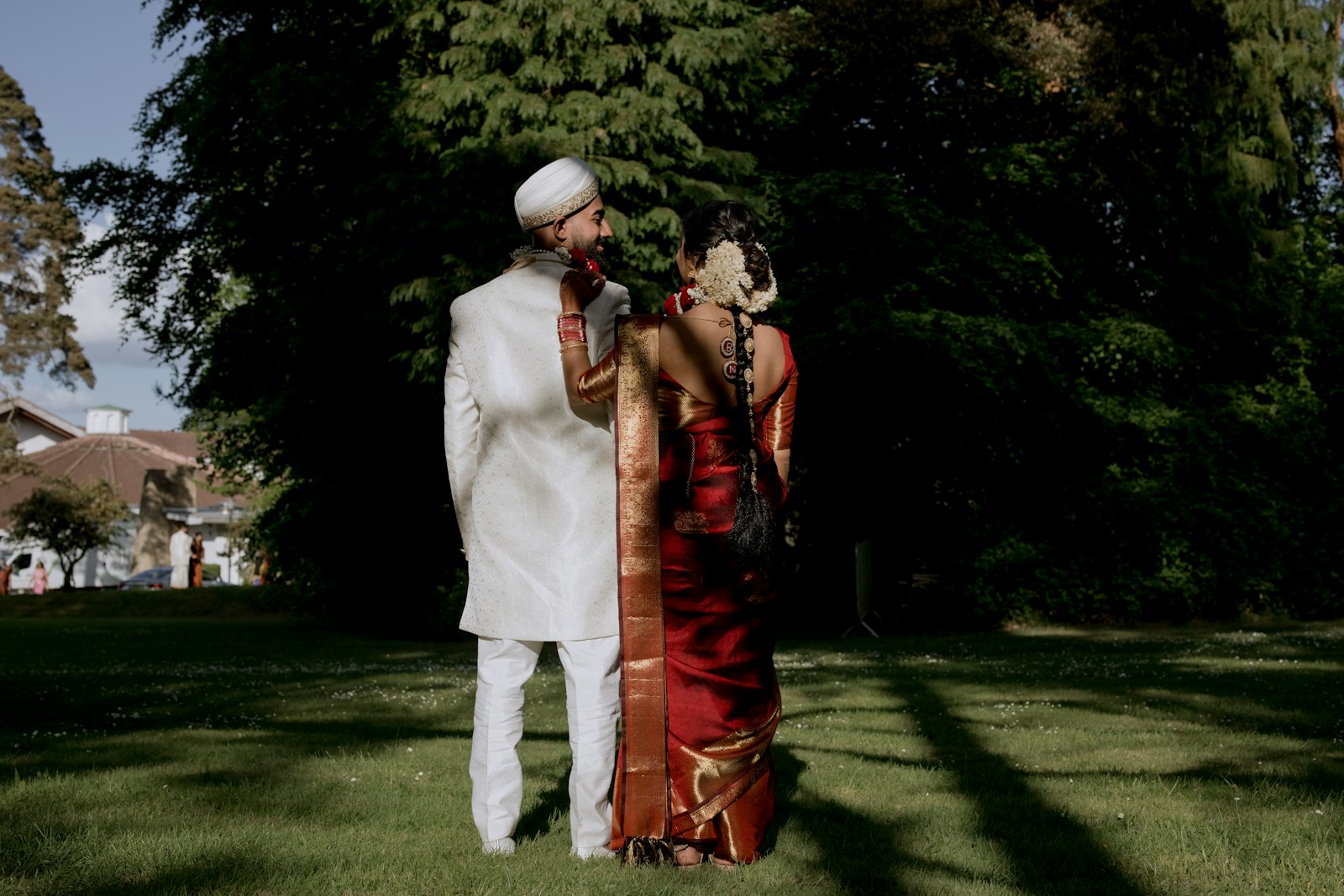
A Banjara Wedding Is Not One Ceremony — It's a Week
Ask someone outside the community what a "Banjara wedding" looks like, and you'll probably get a vague answer about colorful clothes and dancing. Ask someone who's actually sat through one from the first ritual to the last, and you'll get a very different answer: it's not a ceremony, it's a sequence — a week or more of distinct rituals, each with its own name, its own purpose, and its own set of people responsible for making sure it happens correctly.
That sequence varies by region — a tanda in Telangana won't run identically to one in Rajasthan or Maharashtra — but the core structure holds across most Banjara communities: a formal proposal and gotra confirmation, an engagement, a series of pre-wedding rituals that get the whole extended family involved, the wedding day itself, and a set of post-wedding rituals that mark the bride's transition into her new family. This guide walks through that full arc, region-general but rooted in what actually happens on the ground, not a sanitized textbook version.
Before Anything Else: Gotra Confirmation
Long before a date is fixed, before the families even start discussing dowry or logistics, one question has to be settled: gotra. Banjara marriage rules are exogamous — you cannot marry within your own gotra — and this isn't treated as a soft preference, it's a hard boundary enforced by elders and, in many tandas, by the community panchayat itself. Families will trace lineage back several generations if there's any doubt, because getting this wrong isn't just socially awkward, it's considered a serious violation of custom.
Only once gotra compatibility is confirmed does the conversation move to the things outsiders assume come first — horoscope matching, family background, and the couple's own compatibility.
Sagai: The Formal Engagement
Once both families agree, the Sagai (engagement) formalizes the match. Elders from both sides are present, and in more traditional settings, the groom's family brings gifts — clothing, jewelry, and sometimes coconuts or sweets — to the bride's home. A tilak or vermilion mark may be applied to the groom in some regional variations, and rings are exchanged. This is also typically when the wedding date is fixed, often after consulting an elder or priest for an auspicious day.
Unlike some communities where engagement is treated as a formality that can be quietly broken, in Banjara tradition Sagai carries real weight — breaking it off afterward is not taken lightly and usually involves the same community elders who oversaw it in the first place.
The Pre-Wedding Rituals
Haldi
As in much of North and Central India, turmeric paste is applied to both the bride and groom (usually in separate ceremonies at their respective homes) in the days before the wedding. Beyond the obvious skin-brightening purpose, haldi is considered auspicious and protective — a ritual cleansing before the couple enters the next phase of their lives.
Mehndi
Henna is applied to the bride's hands and feet, often in elaborate patterns, and this has become one of the more photographed, celebratory pre-wedding events, with music, dancing, and the bride's friends and female relatives gathering for what's usually a lighter, more relaxed evening compared to the formality of the wedding day itself.
Tel Baan or Ubtan
In several regional variations, a ritual application of oil and a herbal/gram-flour paste (ubtan) is performed on both bride and groom in the days leading up to the wedding — again framed as purification, and again typically accompanied by singing, with older women in the family leading traditional songs specific to this occasion.
The Wedding Day
The Baraat
The groom's procession to the bride's home or the wedding venue — the Baraat — is as central to a Banjara wedding as it is across most North and Central Indian traditions, with dancing, music (often including traditional dhol drumming alongside more modern DJ setups today), and a celebratory, loud arrival that announces the groom's family has arrived.
Var Puja and Milni
On arrival, the groom is welcomed with a formal Var Puja (worship of the groom) performed by the bride's family, followed by Milni — a ritual meeting and greeting between corresponding relatives on both sides (father meets father, brother meets brother, and so on), often with garlands exchanged.
The Actual Wedding Rites
Core rites will look familiar to anyone who has attended a broader Hindu wedding — Kanyadaan (the ceremonial giving away of the bride), Hasta Milap or Panigrahan (joining of hands), and Pheras or Mangal Phera (the couple circling the sacred fire, usually seven times, each round tied to a specific vow). What distinguishes a Banjara wedding within this broader structure is often the surrounding detail: the specific songs sung during each rite, regional variations in how many pheras are taken, and community-specific customs layered on top, such as symbolic gestures involving grain, thread, or cloth that vary by tanda and region.
Sindoor and Mangalsutra
The groom applies sindoor (vermilion) to the bride's hair parting and ties the mangalsutra (sacred thread/necklace) around her neck — the moment most visibly marking her as married, recognized across the wider community regardless of which specific regional variation of the ceremony was followed.
After the Wedding: Rituals That Continue for Days
Vidaai
The bride's formal, often emotional, departure from her parental home — one of the most significant moments of the entire event, marking her transition to her husband's family, and traditionally accompanied by visible grief from the bride's side, regardless of how happy the match is. This isn't performative sadness; it reflects a real structural shift in the bride's life and household.
Griha Pravesh
The bride's welcome into her new marital home, often involving her stepping over a symbolic threshold (sometimes tipping over a container of rice or grain with her foot as she enters, letting it spill — a gesture tied to prosperity), followed by rituals welcoming her formally into the household.
Post-Wedding Visits
In many tandas, a series of visits follow over the subsequent days or weeks — the bride's family visiting the new couple, the couple visiting the bride's family (sometimes called a variant of Muh Dikhai or a reception-style gathering) — reinforcing that marriage in Banjara tradition connects two families as much as it does two individuals, on an ongoing basis, not just for the duration of a ceremony.
What's Changing — and What Isn't
Modern Banjara weddings, especially among urban, educated families, have compressed some of this timeline — a week of rituals might become a tightly scheduled three days, and some pre-wedding events get combined for logistical or budget reasons. Dowry practices, historically significant, are shifting in many families toward more balanced or symbolic exchanges, especially where both partners are working professionals. Destination and banquet-hall weddings are increasingly common alongside or instead of tanda-based home ceremonies.
What hasn't changed is the gotra rule, the centrality of the Baraat and core wedding rites, and the fact that a Banjara wedding — however compressed — is still understood as a multi-day process involving the extended family, not a single afternoon event between two people and their immediate families.
How the Ceremony Differs by Region
Because the Banjara community spans so much of India, the exact sequence and styling of these rituals shifts by state. In Telangana and Andhra Pradesh, wedding rites often carry stronger Telugu regional influence, with local priest traditions and mandap conventions layered onto the core Banjara structure. In Karnataka, where the community is more commonly known as Lambani, the bridal outfit itself tends to carry the heaviest mirror-work of any region, with the craft treated as central to the wedding rather than an accent. In Rajasthan and Gujarat, ceremonies often lean closer to broader Rajasthani/Marwari wedding conventions, with gota-patti embroidery appearing alongside traditional mirror-work. In Maharashtra, Marathi cultural influence shows up in mandap styling and certain ritual sequencing, even as the core Banjara/Gormati identity markers — gotra rules, gift-giving customs, tanda involvement — remain constant.
None of these regional variations is the "correct" version — they're evidence of a community that has spread across a huge geography while still holding onto the core elements (gotra exogamy, the Baraat, the pheras, sindoor and mangalsutra) that mark a wedding as unmistakably Banjara wherever it happens.
Planning Your Own Wedding, With the Right Match First
All of this — the rituals, the family involvement, the community weight behind gotra rules — starts from the same place: finding a compatible match in the first place. On BanjaraMatch, gotra and sub-community details are built into every profile from the start, so you're not discovering a compatibility issue after the families have already met. If you're building toward your own Baraat, create a free profile or explore our gotra reference guide to understand where your own lineage fits before the conversation even begins.

