


 Free Banjara Matrimony


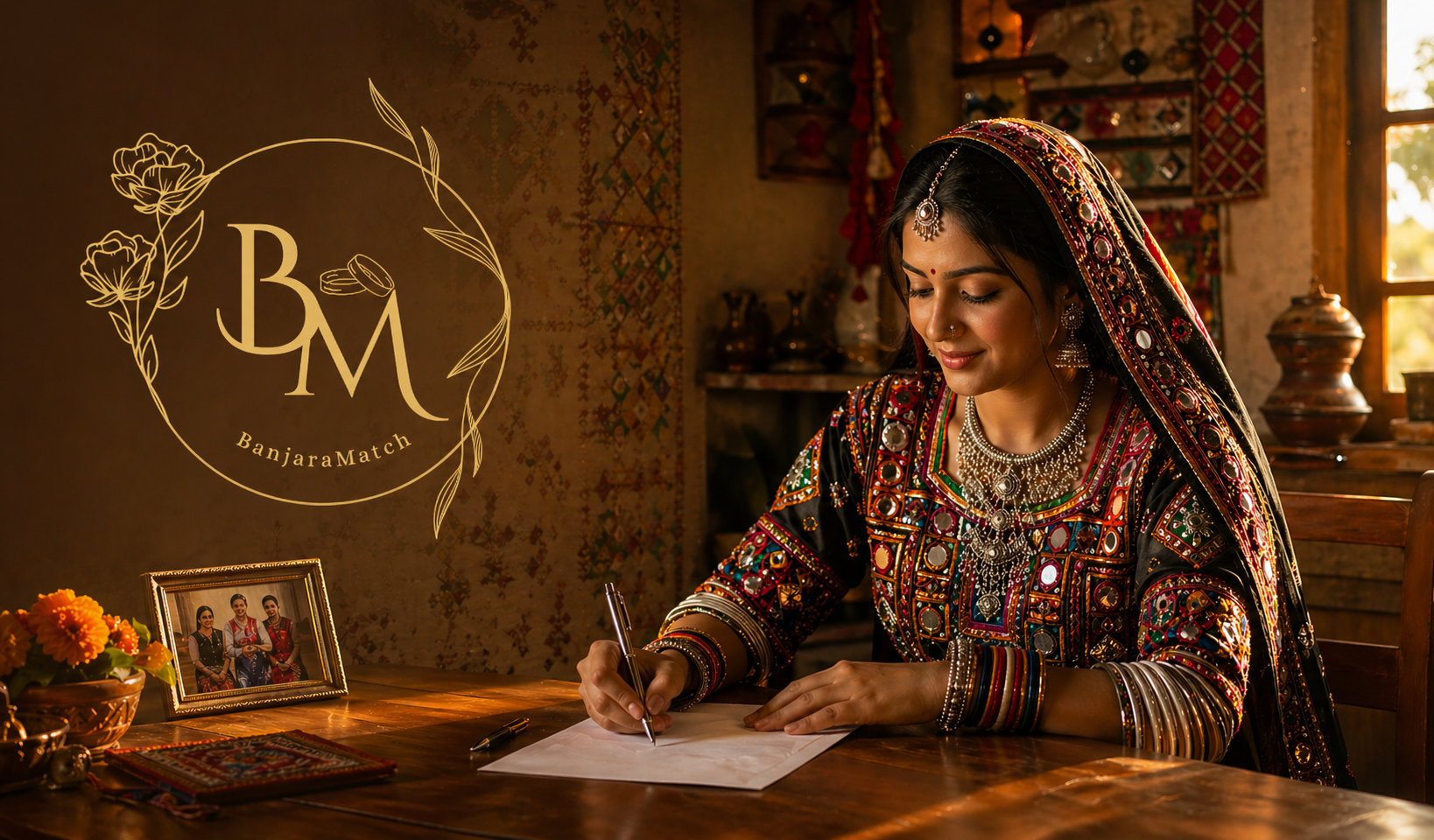
You've spent months — maybe years — looking for the right match. But the first thing a family sees isn't you. It's your biodata. And if that document doesn't make a strong first impression, they'll move on before you even get a chance to speak.
The Banjara community has its own expectations when it comes to a marriage biodata. Some of it overlaps with general Indian matrimony norms. But a lot of it is specific — and getting those specifics right makes a real difference in how quickly families respond, and how seriously they take you.
Here's a practical guide to writing a Banjara marriage biodata that actually works.
1. Get the Structure Right First
A Banjara biodata typically follows a clear structure. Families expect to find information in a predictable order. Surprise them with a "creative" format and you risk looking inexperienced. Stick to this sequence:
- Personal details (name, date of birth, height, complexion)
- Religious and cultural identity (caste, sub-caste, gotra, tanda)
- Education and profession
- Family background
- Contact details
Some families add a brief personal statement or "about me" paragraph at the end. That's fine — but only after the essentials are covered. Don't lead with personality. Lead with identity and background.
2. The Gotra Line Is Non-Negotiable
This is the single most common omission in biodata written by younger people — and it creates immediate friction with families. Your gotra must appear clearly, early, and correctly spelled. Don't write just "Banjara" under caste and leave it at that.
What to include:
- Caste: Banjara (or Lambada / Gor / Vanjari depending on your region and usage)
- Sub-caste / Tanda: Include if known and relevant
- Gotra: State your father's gotra clearly — e.g., Basaavath, Rathod, Pawar, Bhukya, etc.
Families perform their own gotra check before responding. If yours isn't visible, they'll either ask — which adds a step — or skip you entirely because they can't confirm compatibility upfront.
3. Be Precise About Education and Work — Not Vague
Saying "working in a private company" or "doing business" tells a family almost nothing. These vague phrases are red flags in a biodata because they suggest either the person is hiding something, or they haven't taken the process seriously.
Instead, write:
- Qualification: B.Com, Osmania University, 2019
- Occupation: Accounts Executive, ABC Logistics Pvt. Ltd., Hyderabad
- Annual Income: ₹4.2 LPA
If you run your own business, say what it is. "Textile wholesale business, Nagpur, running since 2017" is infinitely more credible than "own business." Income doesn't need to be down to the rupee — a range is fine — but something needs to be there.
4. Family Background Should Feel Warm, Not Like a Census Form
Most biodatas list family details as a dry table: Father — alive / deceased, occupation. Mother — alive, housewife. Two brothers, one sister.
That's the minimum. The best biodatas add a line of context that makes the family feel like a real household — not a government record.
For example, instead of:
Father: Alive. Businessman. Mother: Alive. Housewife. Brothers: 2 (both married). Sister: 1 (married).
Try:
Father runs a hardware shop in Bidar. Mother manages the home. Both elder brothers are settled — one in Hyderabad, one in Pune. Younger sister is married and lives in Gulbarga. We are a close-knit family from the Rathod gotra, rooted in our tanda community.
It's two more sentences. But it paints a picture. That's what families are actually trying to understand — what kind of home their child will enter.
5. A Photo Is Not Optional
In 2026, sending a biodata without a photo is like applying for a job without a resume. Families will ask for one anyway — so including it upfront saves a step and shows confidence.
Photo guidelines for a biodata:
- Recent — within the last 6 months
- Clear face, decent lighting
- Traditional or semi-formal clothing preferred (not party wear, not heavily filtered selfies)
- One photo is enough — don't include multiple angles
If you're uncomfortable including a photo in the document, include the note "Photo available on request" — but know that responses will be slower than profiles that include one upfront.
6. The "About Me" Paragraph — Keep It Honest and Short
If you choose to include a personal statement, three to four sentences is the right length. The goal isn't to market yourself like a LinkedIn profile. It's to give a sense of who you are in a natural, grounded way.
A good example:
"I'm the youngest in a family of four, raised in Nizamabad, and currently working as a civil engineer in Hyderabad. I enjoy spending time with family, follow a vegetarian diet, and take my roots seriously. I'm looking for a life partner who values family, is open to building a home together wherever work takes us, and comes from a background that respects our Banjara traditions."
Notice: no dramatic language, no unrealistic demands ("should be homely yet modern and career-oriented"), no long list of preferences. Just honest, human, direct.
7. What NOT to Put in a Banjara Biodata
These are the most common mistakes that make families hesitate:
- Salary demands for the groom's side — put this in conversation, not in writing
- "No dowry" — well-intentioned but unnecessary to state in the biodata itself
- Horoscope details — share separately if requested, not in the main biodata
- Social media handles — not appropriate for a first introduction document
- Old photos — if it's more than 2 years old, use a newer one
- Excessive filter on the photo — families want to see the person, not an edit
8. Format Matters More Than You Think
A clean, readable Word or PDF document says something about the person before a single word is read. Here's what works:
- Use a simple font — Calibri, Arial, or Times New Roman
- Keep it to one or two pages maximum
- Use clear headings for each section
- Don't use neon colors or decorative borders — keep it professional
- Name the file properly: "Priya_Rathod_Biodata.pdf" — not "biodata_final_v3_NEW.pdf"
One Last Thing: Your BanjaraMatch Profile Is Your Digital Biodata
More and more Banjara families are finding matches through BanjaraMatch before ever exchanging a physical biodata. Your profile on the platform functions exactly like a biodata — it shows your gotra, family background, education, profession, and photo to potential matches.
The same rules apply: fill every field honestly, include a clear photo, and make sure your gotra is correct. A complete profile gets taken seriously. A half-filled one gets skipped — just like an incomplete biodata.
If you haven't completed your BanjaraMatch profile yet, now is the right time. It takes less than 10 minutes, and it puts you in front of verified Banjara families who are actively looking — not just browsing.